



You don't need less stress. You need more capacity.


“Every piece of stress advice assumes you can reduce the demand. Most of the people I speak to can't, and wouldn't want to.”
Nobody is going to lower the demand
The advice is always the same. Work less. Worry less. Simplify. It is fine advice for someone with slack in their life, and useless to the people who read this - a business that needs running, a team that needs deciding for, children who wake early, parents who are getting older.
None of that is a mistake to be corrected. It is the shape of a life with things in it. The honest question is not how to have less to carry. It is what it costs to carry it, and whether that cost can be paid down.

Cortisol is a loan, not a poison
It gets written about as though it were something to eliminate. It isn't. Cortisol mobilises glucose, sharpens attention and holds non-urgent maintenance until later. That is how you get through a hard morning.
The trouble is the last part. Maintenance held until later is repair deferred, and a stressful year is a year of deferring without ever scheduling the repayment.
Where the bill lands
Cortisol should bottom out overnight. Under sustained load that curve flattens - you fall asleep fine and surface in the small hours, losing the deep sleep where repair is scheduled.
The metric that stops climbing while your training is unchanged, which is why it usually gets blamed on the programme.
Cortisol raises glucose for a demand about to arrive. When the demand is a spreadsheet, that fuel has nowhere to go - a sharp morning and a three o'clock hole.
Every item above is an energy transaction. Mitochondria fund them using NAD⁺, and repair enzymes need the same coenzyme to work at all.
The budget shrinks as the bill grows
NAD⁺ declines steadily with age. By your forties you are running on roughly half what you had at 25 - which is also, for most people, the decade the demands peak. Sustained stress raises what repair costs while the pool funding it is falling.
Energy production and repair draw on that same pool, and both run hardest overnight. When supply is short, energy is paid first. Repair takes what is left.
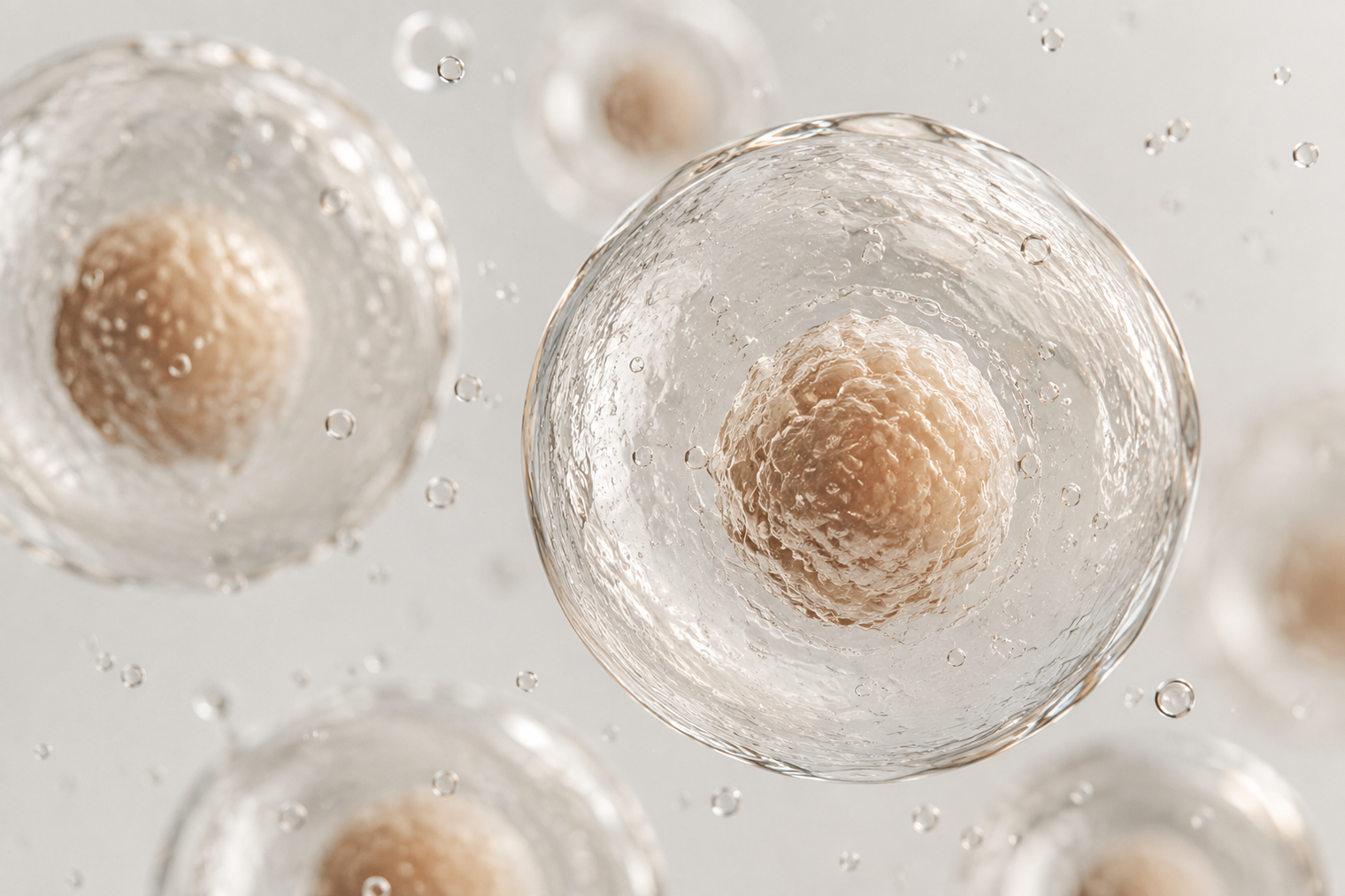
Blood NAD⁺ against participants' own baseline after 14 days of nicotinamide riboside supplementation.¹
What a supplement cannot do
Nothing in a capsule fixes a workload, a difficult year or a five o'clock wake-up. MUTO is not a cortisol blocker and does not claim to be - cortisol is a signal, and suppressing a signal is not the same as resolving what produced it.
It is also not an adaptogen. Ashwagandha and rhodiola act on the stress response itself; there are none in the formula.
What is addressable is the other side of the ledger. If stress raises the repair bill, the useful question is whether your cells have the energy to pay it. Unlike your calendar, that part is an input you can change.
What MUTO actually does
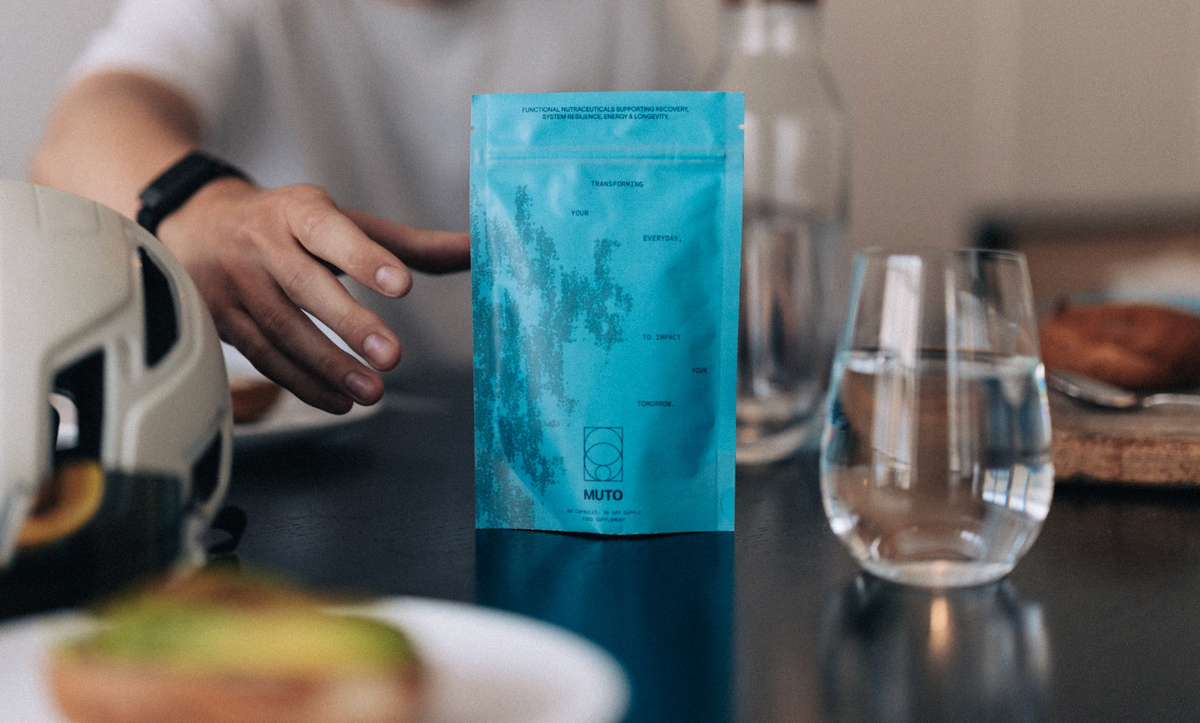
Three jobs, no overlap. Produce NAD⁺, protect it from being broken down as fast as it is made, and give the cell what it needs to spend it. Every dose is at the level used in the research it comes from and printed in full on the label.
No stimulants, so nothing to feel in the first hour and nothing to come down from at four o'clock. Most people describe the afternoon dip going in weeks three to four; wearable data typically moves between day 30 and day 60.
Judge it on your own numbers
Log your 30-day HRV, resting heart rate and sleep averages before your first capsule. If the trend has not moved by day 90, tell us and we refund you. No returned pouches, no argument about how you felt.

£29 for your first month, then £55
Up to 58% off the one-time price. Cancel any time. 90-day money-back guarantee.
¹ Conze, D., Brenner, C., & Kruger, C. L. (2019). Scientific Reports, 9(1), 9772. Blood NAD⁺ measured against participants' own baseline over 14 days of nicotinamide riboside supplementation.
MUTO is a food supplement and is not intended to diagnose, treat, cure or prevent any disease. It does not lower cortisol and is not a treatment for stress, anxiety, burnout or any related condition. If stress is affecting your health, speak to your doctor. If you are pregnant, breastfeeding or taking prescribed medication, speak to your doctor before use. Timings described are typical and not guaranteed; individual results vary.


